LISTENING AGAINST OBLIVION
Künstler-Soldat
Eyes with the sheen of wet enamel look straight into the camera lens – calmly, yet with determination. A high forehead is framed by fine hair, neatly combed back. The face is remarkably symmetrical. It radiates a kind of serenity that does not resonate with circumstances in which this photograph was taken – Poland during World War II.
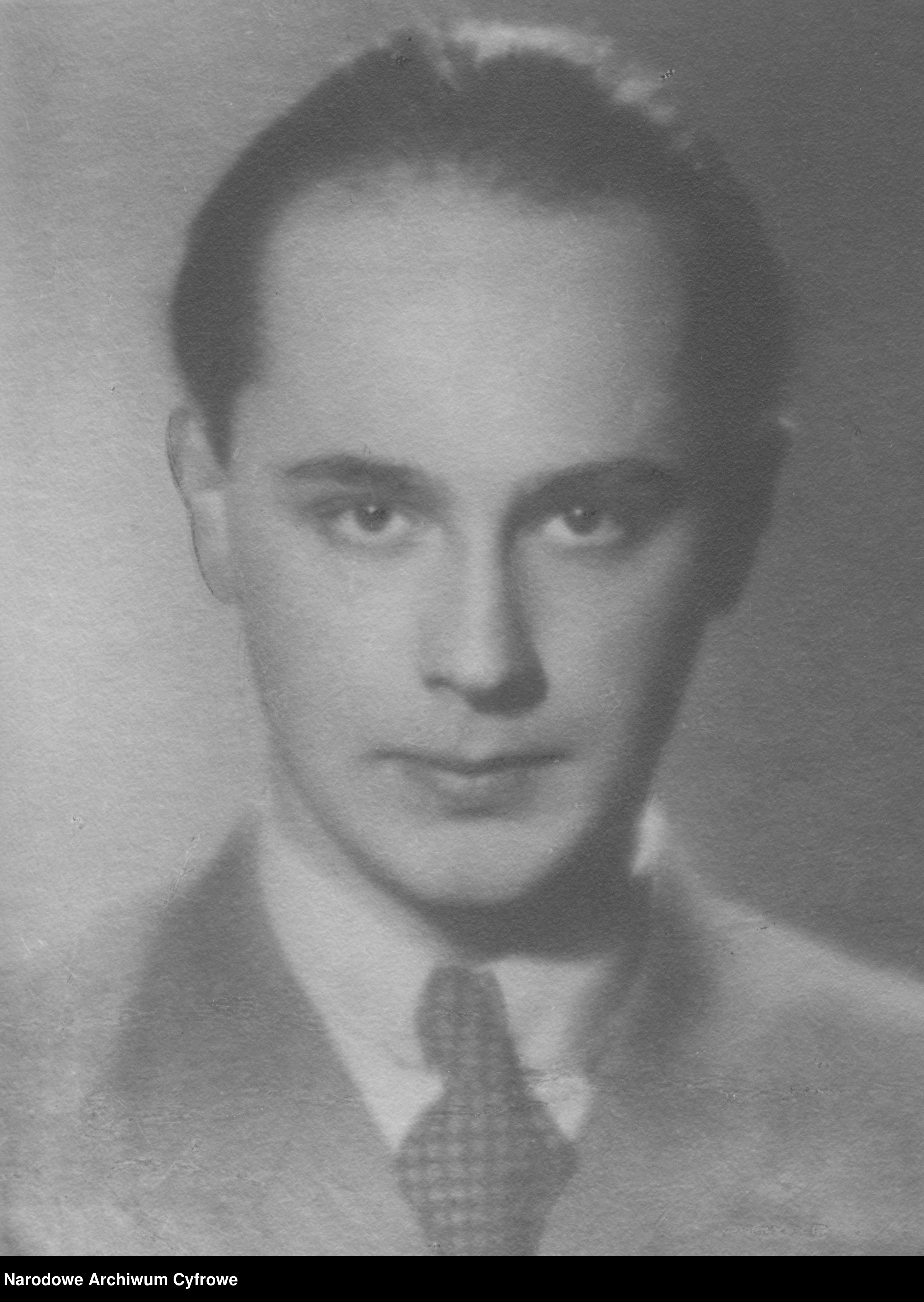
This photograph is the only known portrait of Polish composer, musician and war hero Roman Padlewski in public circulation. The Nazi destruction during the Warsaw Uprising of 1944 not only took his life but erased a vast portion of materials related to his legacy, including most of his compositions. Until today, Padlewski remains largely unknown to the general public.
In Erased Music, the Ruhrtriennale brings both Padlewski’s music and biography out of oblivion. The series is dedicated to composers whose work was marginalised or forgotten from the musical canon. This is the third and final instalment of the series, which began in 2024 with the music of Julius Eastman, performed by the Wild Up Ensemble. Eastman, a queer American composer of colour, created minimalist music of striking intensity, engaging directly with the political realities of his time – the canon remembered however rather his white colleagues. In 2025, the series continued with the music of Wendy Carlos, performed by the British synthesiser collective Will Gregory Moog Ensemble. A pioneer of electronic music and the first transgender artist to win a Grammy Award. Carlos withdrew from the public music industry in protest against its structures, choosing instead to live and work largely outside of it. This series of listening to erased compositions and biographies will continue this year with Roman Padlewski and Charles Tournemire.
Padlewski’s biography stands as that of an artist-soldier who defended the culture and dignity of his nation through both art and arms. It echoes the stories of contemporary artist-soldiers defending their ideals on today’s battlefields around the world. Padlewski’s Stabat Mater (1939) for mixed a cappella choir, composed at the eve of World War II and one of the few scores by composer to survive the war, will be performed at the Jahrhunderthalle Bochum. This site, once part of Nazi Germany’s war apparatus that contributed to the destruction of lives like Padlewski’s, will resonate with his music, performed by Chorwerk Ruhr under the direction of Florian Helgath.
Patriotic family
Padlewski’s story begins in Moscow on 18 November 1915. Europe is deep into total war: mass conscription, trench warfare, and collapsing old empires. Civilian life is shaped by shortages, mobilisation, and censorship. Poland does not exist on the map of Europe – its territory is divided between three occupants: the Russian Empire, the German Empire, and Austria-Hungary. Despite heavy repressions, Polish culture and patriotic ethos remain vividly present in the Padlewski family that belonged to the Polish intelligentsia circle in Moscow. Among his ancestors were participants in the November and January Uprisings, as well as exiles to Siberia. His grandfather, Włodzimierz, fought in the November Uprising 1830–1831 against the Russian Empire.
Poland regained its independent in 1918. In 1922, six-year-old Roman's family was repatriated to Poland and settled in Poznań. A major Prussian administrative and cultural center before 1918, Poznań in 1922 was undergoing a rapid re-Polonization of public life, becoming one of the most dynamic and self-confident cities of the newly independent Polish state. Padlewski’s mother, Nadezhda, founded a private music school there. A concert pianist herself, she taught Roman to play the piano. Padlewski later studied composition and violin at the Poznań Conservatory and musicology at the University of Poznań. Until the outbreak of World War II, he was active in Poznań as a violinist, pianist, conductor of the Karol Szymanowski Choir, lecturer, and author of radio programs for Polish Radio stations in Poznań and Vilnius. In addition, he wrote articles published in regional and national press. As a composer, he made his debut in 1933 with his String Quartet No. 1, and his works were performed during the Polish Music Week in Poznań (1938). The quartet reflects the influence of Karol Szymanowski and the broader late-Romantic and early modern currents in Polish music of the interwar period. At the same time, it shows a young composer searching for his own voice – balancing lyrical expression with a growing interest in formal clarity and contrapuntal texture.
Next to his artistic career, Padlewski became a student at the Reserve Artillery Officer Cadet School in Włodzimierz Wołyński, where he received the rank of cadet in 1937. Military service was mandatory for young men in interwar Poland. The army relied heavily on a large reserve officer corps.
War
After the outbreak of World War II, as a soldier he participated in the September campaign. In November 1939 he got to Warsaw, where he was involved in organising the clandestine and public musical life of the city under German occupation. He founded and led an orchestral ensemble, performed as a soloist and chamber musician. From 1941 to 1943 he was a member of the string quartet of Eugenia Umińska and performed at the café “Salon Sztuki” (Art Salon) run by Bolesław Woytowicz, which functioned as one of the semi-public cultural spaces in occupied Warsaw. He took part in the work of several performance commissions of the so-called Secret Union of Musicians (including the Education, Concerts, and Reconstruction of the Philharmonic and Opera Commissions), which were preparing reforms of music education as well as plans for the rebuilding and future activity of Polish musical institutions after the end of the war. At the same time, he continued studying composition, learned conducting and studied organ at the clandestine Warsaw Conservatory. In a letter from July 1944 to one of his friends, Padlewski wrote:
“At night one can hear the somber music of muffled gunshots - an overture to what is to come. I am finishing my work. It seems to me that over the past few weeks I have changed greatly, matured inwardly; I am not yet standing still. The carefreeness of the people I observe reminds me of dancing on the edge of a volcano. I watch carefully so that one day I will remember what this old, not very splendid world was like, in which I grew up, came of age, and worked.”
Padlewski continued to compose despite the extreme conditions of occupation and the growing dangers of clandestine life in Warsaw. His wartime output includes among others String Quartet No. 2 (1940–42), and the Suite for Violin and Piano (1941) and Songs to words by Jerzy Liebert for soprano and orchestra (1942). His later works, including the Violin Concerto (1944) and String Quartet No. 3 (1944), were created in the final and most tragic phase of the war, under conditions of increasing danger and personal involvement in the resistance.
Warsaw Uprising
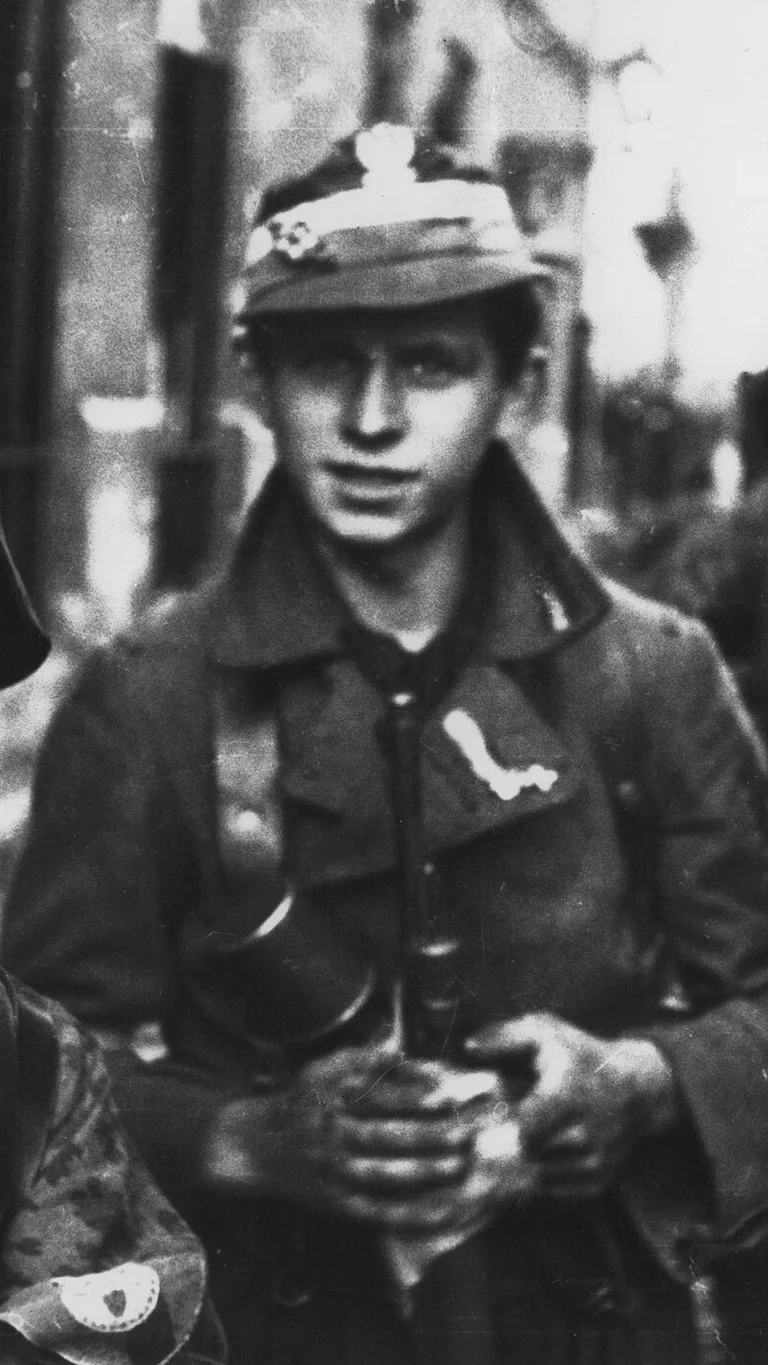
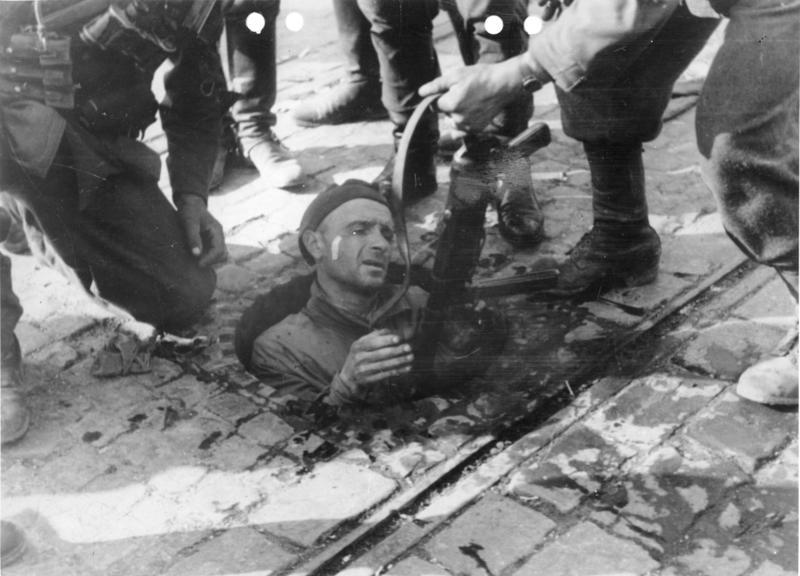
One month after writing that letter, the Warsaw Uprising broke out. It was a broad social effort in a country fully occupied by Nazi Germany, involving not only soldiers but also ordinary citizens of Warsaw – men, women, and even children – who rose up in an attempt to liberate their city from German occupation.
On 1 August 1944, the first day of Warsaw Uprising, as a fire broke out in the palace of Tilla Ciechanowiecka, Padlewski sat down at the concert grand piano inside and began playing Frédéric Chopin’s Revolutionary Étude. Chopin wrote the Étude Op. 10 No. 12 (later coined Revolutionary) in 1831, shortly after the fall of the November Uprising, when Poland’s attempt to regain independence from the Russian Empire was crushed. Over time, it became a musical emblem of Polish resilience under oppression, often interpreted as “music of revolt.” A witness of this event, Count Krzysztof Tyszkiewicz, recalled: “The floor was already on fire when we pulled Roman out.”
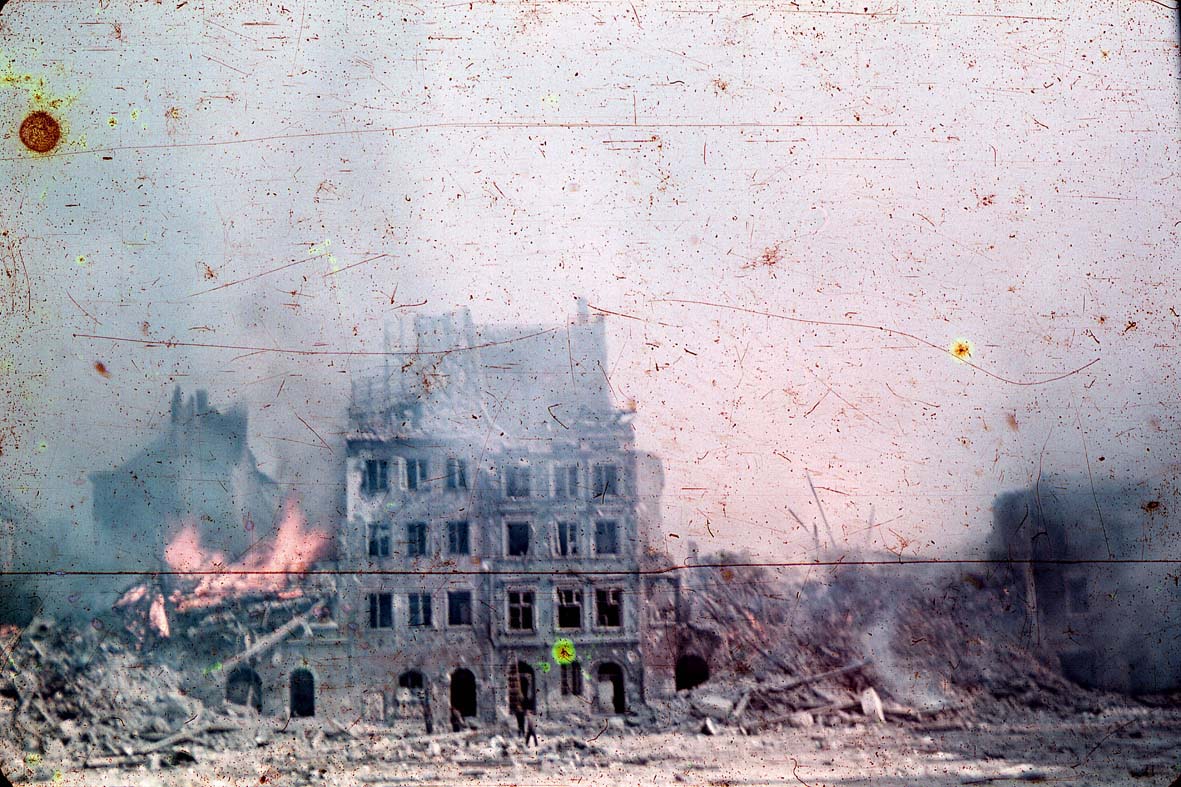
The Warsaw Uprising briefly created a paradoxical, almost Utopian normality within a city still under brutal occupation. For 63 days in the summer of 1944, parts of Warsaw functioned as a liberated, self-organised society: citizens reopened newspapers, organised cultural life, held concerts, and improvised schools, while daily routines of care, solidarity, and mutual aid continued alongside the fighting. This fragile “normal life” existed in the shadow of constant danger and destruction, making it both profoundly real and tragically temporary – a glimpse of freedom sustained in the midst of war.
Padlewski took actively part in armed actions. Among the anecdotes remembered by his comrades in arms is the one in which Padlewski’s unit managed to capture a German tank. Padlewski took position as its gunner and helped halt the enemy’s advance. He is said to have commented: “How, I wonder, am I supposed to operate a tank with these fingers meant for keys, bow, and strings?” On 14 August, he got wounded during an attempt to neutralise a “Goliath” – a remote-controlled German mine resembling a miniature tank. In the field hospital, he was cared for as a nurse by his wartime love, the painter Monika Żeromska. She described Padlewski shortly before his death two days later, on 16 August 1944 : “He is so beautiful, his hands resting on his chest, blackened by the dirt of battle – those beautiful pianist’s hands.”
Padlewski was posthumously awarded the Cross of Valour and the Order of Virtuti Militari – Poland’s highest and most prestigious award for military valour.
Stabat Mater
Most of Padlewski’s scores were destroyed by the Nazi Germany during the war. Among the surviving compositions is Stabat Mater (1939). While composing it, he could not have known that, in a symbolic sense, he was giving musical form to the future fate of his own mother Nadezhda, who would lose two of her sons and her husband during the war. Roman’s older brother, Jerzy, worked in the intelligence service of the Home Army during World War II. Arrested by the Nazis in Warsaw in 1942, he was beheaded in Berlin a year later.
The Stabat Mater – a medieval meditation on the suffering of the Virgin Mary at the foot of the Cross – takes on a deeper resonance in the shadow of war. In this context, it becomes more than a sacred text: it speaks as a universal reflection on pain, loss, and endurance, echoing the lived experience of a generation marked by war.
Roman Padlewski’s Stabat Mater is widely regarded as his most mature work. Setting the complete Latin text, the piece unfolds in three movements, each with a distinct emotional world. The opening section, “Stabat Mater Dolorosa," portrays the silent anguish of a mother witnessing her son’s suffering by a musical texture that is at once intense and inward-looking. The second movement, “Eia Mater,” introduces a sense of collective voice, as if inviting others to enter into and share this grief. In the final part, “Virgo virginum praeclara,” the music turns toward prayer and transcendence, seeking consolation and the promise of joy, and ending in a fragile, almost luminous calm. Padlewski achieves this expressive range through subtle yet striking means. He expands the four choral voices into richer textures and weaves intricate contrapuntal lines. At times his composition moves all voices together in a manner reminiscent of medieval practice – yet infused with modern harmonic tension.
Audio recordings of Padlewski’s Stabat Mater are as scarce as his portraits. In 2019, Katowice City Singers’ Ensemble Camerata Silesia under the direction of Anna Szostak released an album with among others recoding of Padlewski’s composition (Tearfully – DUX Recording Producers, DUX 7610. Released: 2019).
About the author
Krystian Lada is a Polish-Belgian director considered one of the leading artists of his generation. He was the first recipient of the Mortier Next Generation Award for outstanding talent in the field of musical theatre and opera, and was a runner-up and prize-winner at the 2021 Ring Award international competition. His production of Tobias Picker’s Lili Elbe for the Theater St. Gallen won the prestigious Oper!Award for “Best World Premiere 2023”.
Krystian’s innovative approach to staging operas and the classical music repertoire has attracted international attention. He conceived and directed Nostalgia e Rivoluzione, a two-evening pastiche based on early Verdi operas for La Monnaie in Brussels, and The Mysteries of Desire, a pastiche created in collaboration with the World Pride Festival for the Royal Danish Opera. His spatial production of Abendzauber for Ruhrtriennale 2024 combined music by Anton Bruckner and Björk. His large-scale production D’ARC, which combines opera, theatre and dance, was presented by the Warsaw Uprising Museum in collaboration with the Teatr Wielki – Polish National Opera.
Krystian Lada’s most recent productions include Les contes d’Hoffmann for the GöteborgOperan and the Saarländisches Staatstheater, Il ritorno d’Ulisse in patria for Theater Basel, Vivaldi’s Bajazet for the Theater an der Wien, Daniel Cátan’s Florencia en el Amazonas, Verdi’s Requiem and Macbeth for the Theater St. Gallen, Nabucco and I Capuleti e i Montecchi for the Opera Wrocław, Rossini’s Sigismondo, Brahms’ Elegia for the Opera Rara Festival in Kraków, and Mahagonny. Afterparty for the Teatr Studio in Warsaw.
Krystian is the artistic programme director of the Ruhrtriennale 2024–26. From 2013–17, he was director of dramaturgy, communication and empowerment, as well as an artistic advisor at La Monnaie opera house in Brussels. Since May 2017, he has been General Director and Artistic Director of The Airport Society/House of Lada, a Belgian cooperative of opera artists and social innovators. For the company, he conceived and directed the world premieres of Aria di Potenza and Unknown, I Live with You.