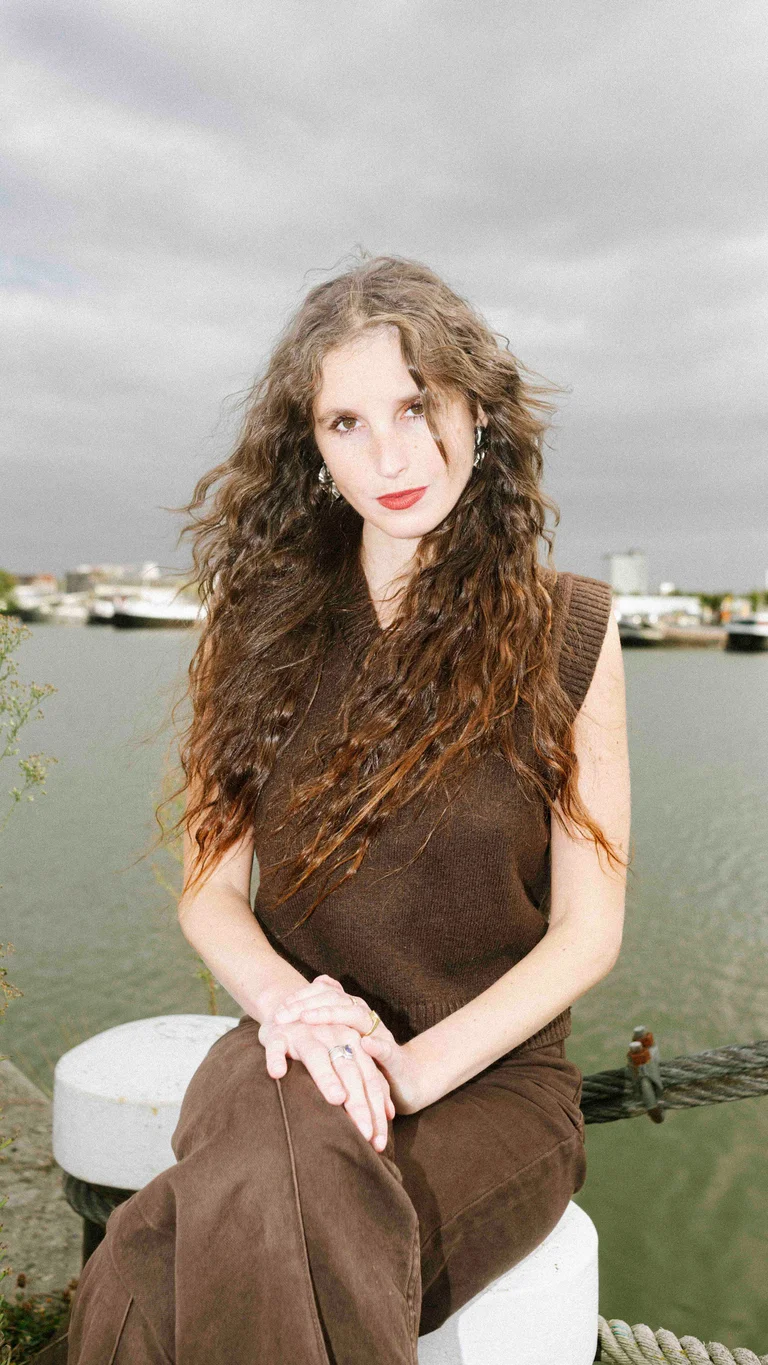
Siddhartha Reimagined
Interview with Lisaboa Houbrechts
By chance, Lisaboa Houbrechts had a copy of Hermann Hesse’s Siddhartha in her luggage on her trip to India. When she returned home, she found – contrary to her expectations – the words to describe her own journey in that short book from 1922 along with insights that were as bitter as they were liberating. In a conversation with dramaturg Anna Chernomordik Lisaboa Houbrechts reveals what the book told her about identity and universal truth and how her very personal vision of Siddhartha came to be.
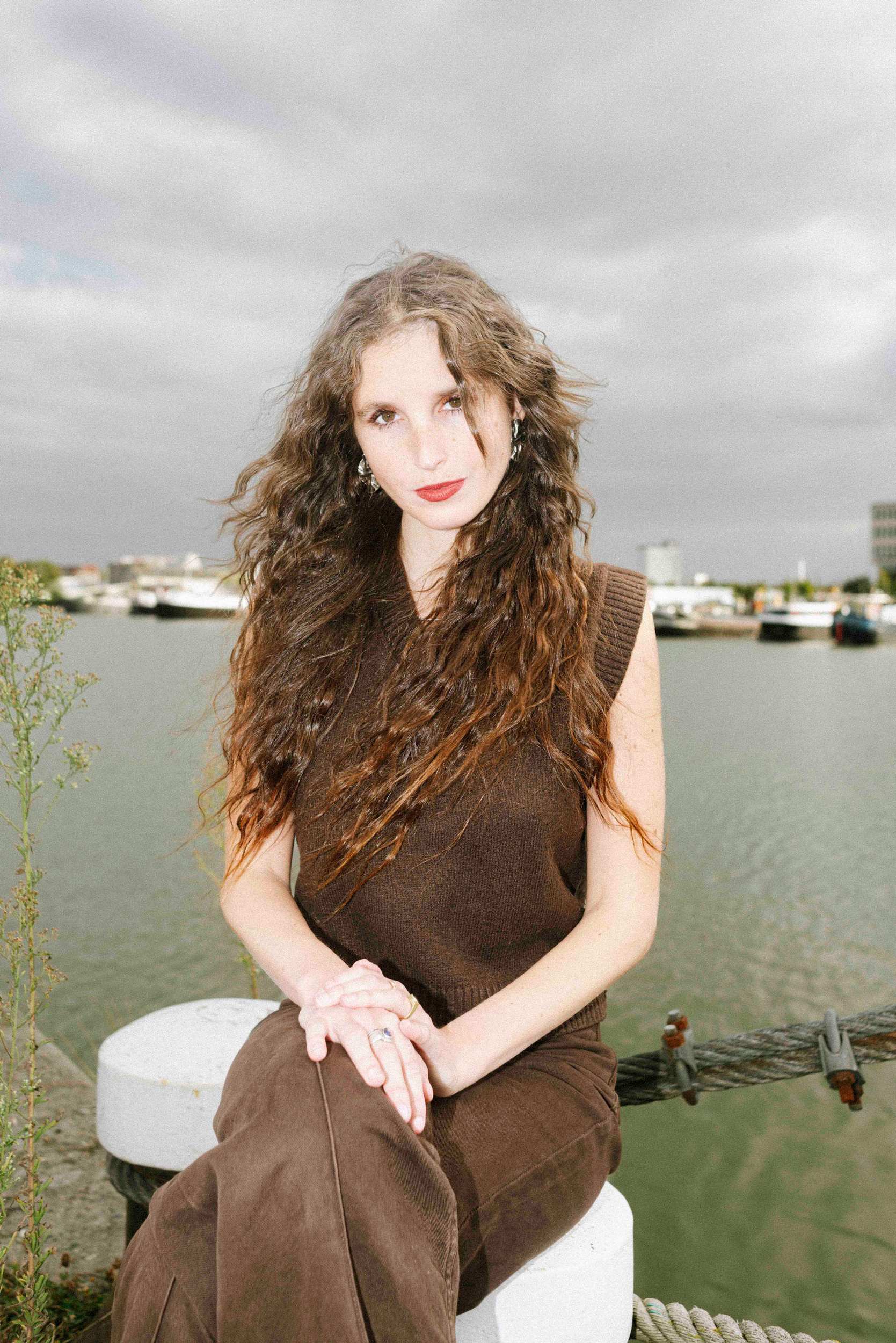
Anna Chernomordik: Lisaboa, you often begin your research by traveling. But the fact that you ended up in India and came across Siddhartha was purely by chance. How did you meet?
Lisaboa Houbrechts: In 2020, when COVID broke out, I was working with the composer Fabrizio Cassol on a production, where the famous dancer Shantala Shivalingappa was part of the team. Because of the pandemic we couldn’t work with her in Europe anymore. But the flights to India were still possible, so I went to Chennai to work with her there. It was my first time in India. Although there's so many clichés it was nothing at all, as I had imagined. There was no mass of people, that made you feel very small. The temples and the streets were abandoned. But the priests still did all the rituals.
During my time in India, I had a lot of conversations with Shantala about my life and coming into terms with my intersexuality. It was something I was afraid to talk about before, the struggle I had with defining what intersexuality is, what this masculine side is, that I was born with, that never really developed and also my whole medical history. It was interesting to have an Indian view.
„[...] Every line I read, made me cry. The book gave me words for my experience.“
AC: And how did Siddhartha fall into place?
LH: I bought this book, I think, when I was 15 or 16, but I never read it. And the evening before I took the plane, I put it in my suitcase and I don't know why. But I only read it for the first time, when I came back to Brussels. During that time I was very emotional. I hoped, that the book would help me to travel back or to process this experience. And every line I read, made me cry. The book gave me words for my experience. I couldn't write at that moment. But while reading Hesse, I had the feeling that he found a way to describe my experience. It’s funny, because Hesse never went to India. His father was a missionary, he grew up with his stories. Hesse traveled to Southeast Asia, but never to the India that we know as India today.
AC: What did he describe that resonated with you?
LH: He describes the process of finding peace, going through the deepest depths, through suicidal thoughts, in order to find grace, liberty and the joy of life. He talked about how it is to be human, what struggle means, how it means to be yourself, to look yourself in the eye.
AC: Nowadays, in cultural contexts, we often talk about appropriation – who is allowed to speak about what and how. On one hand, Hesse had never been in India; on the other hand, his fictional story, echoing the life of Siddhartha Gautama who later becomes a buddha, was also popular in India and translated into several languages of the Indian subcontinent. And several decades later, you find an echo, an amalgam of your own experiences in India, in this book. When you wrote the libretto for your SIDDHARTHA, what was it like for you to speak through the words of another?
LH: The book resonated with me, but at the same time I knew, if I just put it on stage, as he has written it, it will not be me. I made some big decisions. I changed the gender of the cast. In Hesse’s story Siddhartha is clearly a man, meeting other male key figures on his road in order to find enlightenment. In my life and when I was in India, it were all women, it was the dancer Shantala Shivalingappa, her mother Savytri Nair, a famous dancer, who suffered a stroke and had to grapple with her fate. And other people I've met throughout my career have been mostly feminine figures, that have a big influence, on me. I decided to gather some of these women I had in mind and let them play the key figures.
„In Hesse’s story, Siddhartha is clearly a man, meeting other male key figures on his road in order to find enlightenment. In my life and when I was in India, it were all women.“
AC: Among them is the Sufi singer Zila Khan, who will play the role of Buddha or the opera singer Claron MacFadden who will portray Siddhartha’s mother.
LH: The main character will be non-binary, or read as female, played by singer-songwriter Meskerem Mees. I saw her in a performance of Anne Teresa de Keersmaeker. The way she sings her songs made me curious what that sensitivity would bring to Siddhartha. And then while writing the libretto I also added two voices of the soul of Siddhartha – sung by Casper Clausen from the band Efterklang and sopranist Samuel Marino – so he would be a little bit less arrogant. Because in the original version Siddhartha is someone, who's very self-aware. My version is much more a searching Siddhartha, that is struggling with her part and with her gender. I try to link the topics, that I'm struggling with myself and add new text from within the character, not as myself, Lisaboa or the director.
AC: Could you describe the difference?
LH: There's a lot of meta theatre today, which I find very interesting, looking at Carolina Bianchi's work or Samira Elagoz. But here I try putting my secrets inside the characters without telling, that they're mine, so they can become a place of refuge as the book was a refuge for me. I could slip in new thoughts, that talked about Siddhartha, not as a man, finding enlightenment and becoming Buddha, but a woman, that is maybe also intersex, that has to become the Buddha, in order to overcome her suffering. And that is a very personal story. After rewriting it, I did not know anymore, where I begin and where Hesse ends. But by going more and more into my own voice, I came closer to what Hesse was saying.
„Siddhartha is a very enigmatic book. It talks about different states of the soul, exercises, in order to find a connection with the soul. Some little lines reflect the whole world.“
AC: So your interpretation of Siddhartha changed over the course of the process.
LH: When you read something for the first time, you tend to project your own thoughts into what you're reading. But spending so much time with it, rereading a passage, I came to a realization: Many thoughts, that I wanted to add were already in the book. But sometimes I judged Hesse. For example, there's only one woman in his story and she is a sex worker. And what she's saying about sexuality reminded me of a man, writing about a woman. And then she's the only one that has to die. But while working and visualizing it, I came closer to Hesse than I actually thought I would.
AC: And what were the challenges while writing the libretto?
LH: Siddhartha is a very enigmatic book. It talks about different states of the soul, exercises, in order to find a connection with the soul. Some little lines reflect the whole world and you can never grab it by the tail, it always escapes. I still have the feeling, there's things, that escaped me from the small book – it's only 120 pages, or so. But writing the libretto was also very practical, with thoughts about how to navigate the 24 chorus members, how can they be a changing society from act to act. Hermann Hesse doesn't really describe it very clearly, there's not a text, only a few figures within. And there are also other questions, like – should I really make a statement and be clear and saying something like: “Siddhartha is accepting her double gender.” But sometimes you make a point tangible without having to explain it, not by telling but by showing. It’s also nice to add new enigmas to an already very enigmatic book.
„So Shantala Shivalingappa told me: ‘If you really want to know, what Siddhartha is about, you have to experience death.’“
AC: Are there any other profound changes – including in the character of Siddhartha – that you explore?
LH: I think Meskerem and I still have to sculpt it, so it can also become her Siddhartha. I also looked more into the story of the historical Siddhartha. His story is different from Hermann Hesse. In the original story Siddhartha was confronted with three different sides of suffering, with death, age and sickness. That makes him leave his family and travel from the south of Nepal, to the north of India. So Shantala Shivalingappa told me: “If you really want to know, what Siddhartha is about, you have to experience death.” It’s not in the heart of Hesse's book, but I traveled to Varanasi. That is the city of the death, where a lot of people go to die in India. To see dead people lying next to the road, to see the burning grounds, where you have families, all gathered, dressed in white, putting their loved ones on fire, was a very profound experience. It was a bit scary to experience the depth of faith. But in a way, I understood why Siddhartha was looking for depth.
Knowing what the historical Siddhartha might have been through changed my view and his meditative search for freedom from suffering resonated in me. It’s very different from Hesse's view. I think he traced his own trajectory in his book. His Siddhartha is a young writer, with his verses and poems, and in the end, he comes to the conclusion, that love is everything. The book also talks a bit about Hermann Hesses’ relationship to his children. I cannot have children and I think also, the original Siddhartha doesn't really go into the family life. I was more interested in the mystic way. Hesse also made Siddhartha meet Buddha, but don’t follow him. In my story, he becomes his own Buddha, or his own master. These are some big shifts, but there are still things to be discovered.
AC: Not only are you the director and writer of SIDDHARTHA, but you’ll also be playing the role of Kamala, Siddhartha’s lover, in some performances.
LH: I'm going to share it with Milēna Miškēviča, an actress from the Dailes Theatre in Riga, with which we collaborate. And since Kamala is pregnant in our interpretation, the costume designer Oumar Dicko will create a see-through baby-bump. This is very meaningful to me because I can never have children. So I can come the closest to having children by making this very costume that he takes so much precision in order to design it.
„I need to always give more than 200 per cent. Otherwise I don't see the reason why doing it.“
AC: The project presents so many other challenges – you’re working with a wide variety of disciplines and with people from different cultural backgrounds who are brought together in a very short time. You make yourself so vulnerable on so many levels. Why are you putting yourself through this?
LH: I need to always give more than 200 per cent. Otherwise, I don't see the reason why doing it. Maybe Siddhartha is similar, he has to go hard. I like the hard way. I like the big aesthetical shocks. There are so many artists who are much more extreme, like Marina Abramović, whose work is also present on the festival, or Florentina Holzinger. There's a lot of women in the arts that are not afraid to push their whole body in their work. I find it fascinating. Sometimes there's a brutality in female art.
AC: The rehearsal process takes place in several phases: several weeks in Antwerp, then in Riga, and then back in Antwerp.
LH: Only five days before the premiere everything comes together in Gladbeck.
AC: Six years of preparation for five days. Different people from different disciplines and cultures coming together, dancers, singers, actors. Your work is often interdisciplinary. How is this different from your usual processes?
LH: I must admit it’s super challenging. I did interdisciplinary productions with a smaller team. But the most difficult thing is not the dimension of the undertaking. We talk about a holy experience and how can this be translated into theater. As a theater maker, I know practically and technically how to align these different worlds. I’m also very happy with the musical leader Christian Balvig, who's also helping me to bring all these worlds together. There are so many people that I need to thank. But the challenge here is indeed people from all over the world, not speaking each other's languages. This process needs a lot of trust. Five days for six years, it is in a way very true, but I cannot put the pressure of those six years into the rehearsals. Sometimes the feeling of trust led to this meeting and you don't always have to put in all the preparations at every moment onto everybody, but just to allow for people to meet and for time to manifest itself.